by Karen Sherk Chio
January 6, 2026
Birthstones in the Province of Mercy by Bo Hee Moon; Milkweed Editions, 2026; 91 pages; $18.00.
Memory, in the context of loss, can be a mercy. And what then does one do in its absence? The speaker in Bo Hee Moon’s second collection, Birthstones in the Province of Mercy, lyrically conjures detailed imaginations of her late Korean birth mother who she, a transnational adoptee in the United States, only knew in infanthood. Elegiac, incisive, piercing, and tender, these finely-crafted and strikingly concise poems, often addressed to a birth mother the speaker cannot consciously remember, excavate the nuance of absence, identity, and belonging. A deserved winner of the 2024-25 Jake Adam York Prize, Moon’s book demonstrates exceptional skill in its cohesion, restraint, and honesty, laying bare the often overlooked, complex losses that may be experienced by adoptees, especially across geographies and cultures.
The opening poem, “Generosity Gwandae (관대)” exemplifies the collection’s emotional range, plentiful natural imagery, and inclusion of the Korean language. In the poem’s opening line, the speaker’s “heartspace feels like a bitter fruit / a meanness turning to a sweet red-orange.” Contradictorily, she continues by reflecting on “chinjeol (친절) and dajeong (다정)” which are “both words for kindness in Korean” and finds comfort in an imagined meeting with her birth mother: “a reunion in the aching and the desire, / a reunion in the fields of roses and wild tea.” Throughout the poem and the entire manuscript, Moon’s speaker is at times angry and bitter, grieving the loss of her birth family as well as the difficult childhood she experienced as an adoptee. At other times she is hopeful from reclaiming aspects of her Korean identity and heritage. Moon incorporates Korean words in both their Romanized and Hangul transcriptions and almost always includes an English explanation within the poem (conveniently accessible for anglophone readers), illustrating the thematic tension between hope and loss: the speaker is able to integrate her birth mother’s mother tongue into her own language, creating connection, even as she may only do so as a foreign language learner, a disconnect that may never be fully bridged.
Poems in the first of the collection’s three parts, “Divination/Cloud,” meticulously meditate on the speaker’s birth mother, omma in Korean, using the scraps of information the speaker has about her: birth year, death date, and scant details in the speaker’s adoption file. In “Gijesa (기제사): November 10, 1992,” a poem which commemorates her birth mother’s death date, the speaker infers that “when she died, / ‘How Do You Talk // to an Angel’ was the top song, / a whisper of her life, black / seeds in a tiny wildflower.” In “Year of the Black Tiger,” the speaker imagines that “omma gives me / my life which is as sweet / and maddening as love.” By contrast, Moon threads illuminating glimpses of the speaker’s disappointment in her adoptive American parents:: her “substitute father,” who the reader comes to know as lecherous, sexually inappropriate, and sometimes high or stoned, and her absent “substitute mother” who “quit” the family. The tensile juxtaposition of imagined and actual memories creates an ache that reverberates through the manuscript. The section’s final three poems, a series each entitled “The Body After Trauma,” reveal hope and healing from this pain: “I am changing / out of these old clothes, / which requires no effort / or focus, I am changing, completely, / behind a rice paper door.”
Moon demonstrates exquisite control of the line, particularly evident in parts two and three, “Offerings to the Spirits/Stone” and “Exorcisms/Peach,” respectively. Most poems in these sections are structured in very brief couplets often containing one to three words per line. Used in “Sacrifice: I was Named by the Orphanage,” this extreme concision creates a paradoxical sense of expansion within the text that facilitates leaps in thought and associative meaning, highlights the theme of absence with plentiful white space, and sets a contemplative pace:
My singing
voice
is not very
good, my substitute
father said
before my
Torah portion—
he was getting
stoned in
the bathroom,
an air vent
on. Cast out
and drifting
farther from
omma,
I made
my way across
an ocean.
The poet’s plain diction contributes to an intense clarity in meaning and metaphor, resulting in the manuscript’s clear, strong voice. In the poem “Halmeoni,” (a title that means “grandparents”) the speaker searingly states of her adoptive family, “After years // of smiling / back // at my / captor, // I left / captivity. // Wood / gives // birth / to fire.”
The final section, a series of mostly epistolary poems addressed to the speaker’s birth mother, contains some of the most tender renderings of the speaker’s longing. The motifs of the body and Korean flora figure prominently in these compact poems. In “Letters to Omma—Reunion,” the speaker likens herself to wild Korean ginseng, which grows from “long roots // like witchy hair” for which her birth mother’s imagined gaze becomes “black loam / for my tender roots.” The speaker’s yearning for a mother she cannot remember is deep, insistent, and visceral; the loss is as material as it is emotional. Moon implores the reader to smell and hear her: “My birth // mother was / not nameless. // She had a scent, / a sound.”
Birthstones in the Province of Mercy is a finely-wrought rendering of a transnational adoptee’s loss that traverses geography, language, and time. For Moon, mercy is found not in memory but in the tenacious and tender pursuit of roots, culture, and identity. It is a moving and worthwhile read for any of us who have sought to understand where we come from and where we will decide to go from there.
__________________________________________________________________________________________________________________________________________________________________________
__________________________________________________________________________________________________________________________________________________________________________
__________________________________________________________________________________________________________________________________________________________________________
“I search for you everyplace" : The Longing and Loss of Transnational Adoption in Bo Hee Moon’s Birthstones in the Province of Mercy
POETRY REVIEW

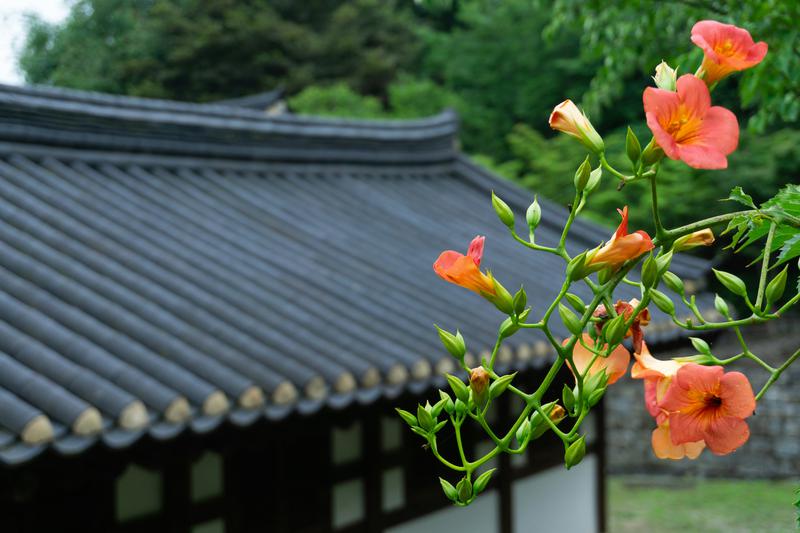
Image by Young-Kyung Kim from UnSplash
Karen Sherk Chio (she/her) earned an MFA in poetry from the University of New Orleans, where she was the winner of the 2025 Andrea Saunders Gereighty/ Academy of American Poets Award, the 2025 Maxine and Joseph Cassin Prize for Poetry Thesis, and the 2023 Vassar Miller Poetry Award. She is an associate poetry editor for West Trade Review, a full-time public health worker, a parent, and a spouse. Her creative work has appeared in swamp pink, Salamander, CALYX Journal, and SmokeLong Quarterly, among others, and her critical work has been published by Colorado Review.
__________________________________________________________________________________________________________________________________________________________________________
© 2025 Iron Oak Editions


__________________________________________________________________________________________________________________________________________________________________________
© 2026 Iron Oak Editions



Stay Connected to Our Literary Community. Subscribe to Our Substack Roots & Words