by Claire Jussel
November 18, 2025
Lazarus Species by Devon Walker-Figueroa; Milkweed Editions; 160 pages; $18.00.
Devon Walker-Figueroa’s latest poetry collection Lazarus Species serves up an ambitious body of work sizzling with unique connections delivered at the speed of synaptic firing. Where else could you hope to find a prehistoric and futuristic reimagining of Sir Philip Sydney’s Petrarchan sonnet series “Astrophil and Stella”, a footnote-layered deep dives into figures such as Joe Dempsey, Lawrence of Arabia, and Nikolia Tesla, and layered examinations on speaking in tongues, sensual snails, arsenic tinged serial killers, mathematic problems, or awkward business dinners? These intersections are only part of the reason that Lazarus Species might be best described as a museum-archive-meets-mycellium-network. With Walker-Figueroa’s erudite and unabashed sensibility, each subject and sonic phrase becomes a link for a myriad of allusions, associations, admissions, and astonishments.
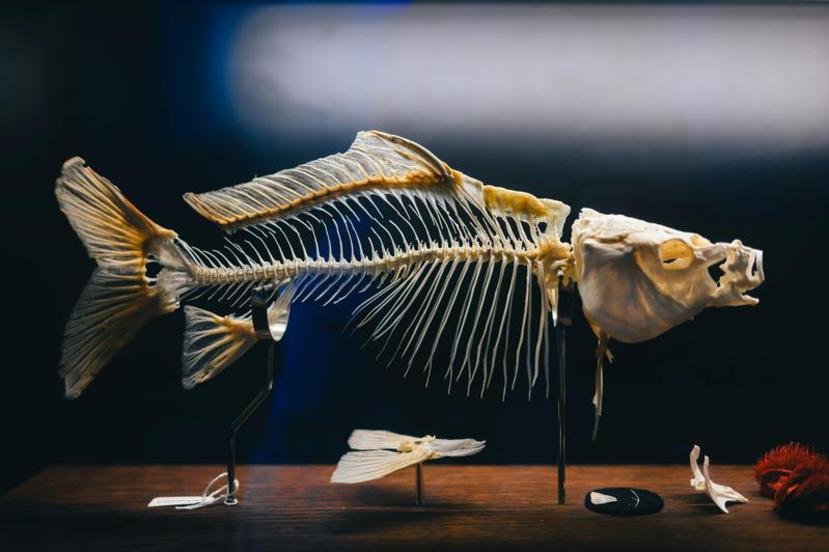
The sprawling scope of Lazarus Species is tethered by the intimacy of its internal logic. Whether a poem is mapped along tributaries of traditional forms, driven by sonic qualities, shaped by theorems, or guided by the mental mechanisms of the speaker, a conscious intricacy is palpable throughout the collection. Many poems feel propelled by the momentum of thought, such as the “The Perch,” which follows the contemplative flow of the speaker lingering over an ancient fish behind museum glass:
mummy fish that swam in time-
lapse through twenty centuries
of conquest and collapse,
who might in fact have passed,
during flood times, through sand-
stone temples, darting past
the at last moistened eyes
of Isis–all this–just to nourish
a stranger’s desire to see me
disappear…
Much like the speaker in “The Perch,” those who slow and extend their attention on the exhibited language of Lazarus Species will be rewarded. After all, some of the most wondrous tidbits, confessions, and histories are nestled in the footnotes and parentheticals. In both her epic multi-part poems and briefer installments, Walker-Figueroa serves up a linguistic feast. Whether considering the particular diction of boxing in “Scrap” or dissolving one word into new sense-making in “Ameliorates,” her language crackles with curiosity and flexibility. The depth and breadth of Lazarus Species is punctuated by fresh snaps of brevity and crisply packaged observation, such as “bold shade / that crowns each summer / in a victory of leaves (wholes breathing keeps / trading places with our own)”.
Within the highly populated museum of Lazarus Species, Walker-Figueroa has curated an elusive and unifying tone that both aches, plays and emanates a heady decay. While at times this tonal quality is subtly spread, it is frequently featured on full display: “The sun keeps rising / from stage right / like an obedient paper doll; the future/ still rhymes imperfectly with horror; / and all our applause– / like the storms we play / to put ourselves sound to sleep–/ has finally been compressed / just into loss.” Walker-Figueroa bedazzles this existential with artifacts from the ancient past and unfurling future, as demonstrated in “Australopitheca & Starman.” This translation of the Elizabethan sonnet series “Astrophil and Stella” places an ancient humanoid fossil and crash-test-dummy launched into space at the helm:
... What fable turn yr head? The dead do rank
you highly among young mummies; & the living explaine
you away as an inventor’s red right hand, glove in a plane’s
matter. Much belov’d in yr high gloss sarcophagus & drunk
on a planet’s calando applause, you lack a plan; so young
you are compared to the fission diminishing in yr rearview (29)
In this striking reimagining and all throughout Lazarus Species, Walker-Figueroa clinches together deep time and nascent futures, fugue and revelry, precise attention, and utterly surprising permutations of language. This labyrinthine collection delivers awe, intrigue, and above all a reverence for the possibilities of poetry.
__________________________________________________________________________________________________________________________________________________________________________
__________________________________________________________________________________________________________________________________________________________________________
__________________________________________________________________________________________________________________________________________________________________________
“On a Planet’s Calando Applause”: Diction, Decay, and Deep Dives in Devon Walker Figueroa’s Lazarus Species
POETRY REVIEW
Image from Pexels
Claire Jussel is a poet, writer, and artist from Boise, Idaho. Her work has appeared in or is forthcoming in West Trade Review, Wizards in Space, Split Rock Review, Black Fox Literary Magazine, and SEISMA Magazine. She currently resides in Ames, Iowa where she is pursuing her MFA in Creative Writing & Environment at Iowa State University.
__________________________________________________________________________________________________________________________________________________________________________

__________________________________________________________________________________________________________________________________________________________________________

© 2025 Iron Oak Editions




Stay Connected to Our Literary Community. Subscribe to Our Substack Roots & Words